
NEWS
The Port of Barcelona is developing a circular system to turn companies’ plastic waste into new resources
More than forty companies from the port area are taking part in the DELTA project, an initiative by Fundació BCN Port Innovation to connect plastic waste generators with companies looking to make use of these materials. inèdit, together with Símbiosy, has contributed to the project through a study identifying plastic flows within the Port ecosystem, their condition and destination, as well as potential reuse opportunities.
Fundació BCN Port Innovation aims to turn the plastic waste generated in the port area into new resources for other companies. This is the goal of DELTA, an initiative under the CIRCULARS programme that seeks to identify existing plastic flows across the Port, determine which companies generate them and which could reuse them, and ultimately promote industrial symbiosis projects. Funded by the Agència de Residus de Catalunya, the project is based on a simple idea: what is waste for one company can be a valuable raw material for another. To make this possible, the Foundation has launched a study together with inèdit and Símbiosy to characterise plastic flows across the port ecosystem in terms of volume, condition and destination, while identifying both the companies generating these materials and potential recipients within or near the port area.
From analysis to concrete projects
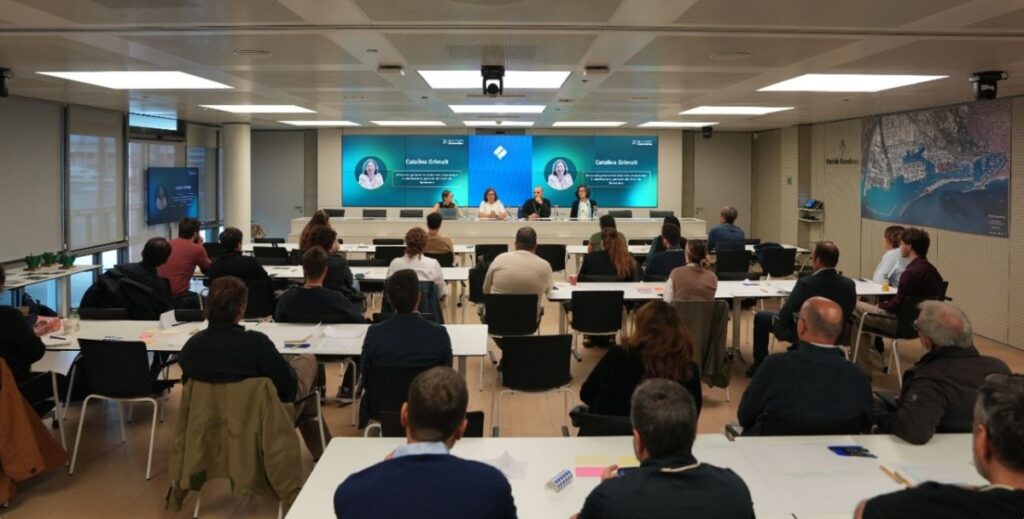
To share the findings and start building these connections, more than forty representatives from companies based at the Port of Barcelona and its surrounding area gathered on 20 October at the World Trade Center Barcelona for the event «CIRCULARS. Connecting plastic», organised by Fundació BCN Port Innovation. The session brought together companies that generate and manage plastic waste with others that could potentially incorporate these materials into their production processes.
The meeting provided an opportunity to discuss the study’s findings with companies, identify the main barriers to managing and reusing these materials, and gather proposals to overcome these challenges. It also helped establish the first direct contacts between waste generators and potential users.
The materials identified as having potential include plastic waste such as the film used in logistics operations and protective tarpaulins used in the shipbuilding industry, which may be in demand in other sectors.
The materials identified as having potential include plastic waste such as the film used in logistics operations and protective tarpaulins used in the shipbuilding industry, which may be in demand in other sectors. “There can be no long-term competitiveness without sustainability. And for a port like ours, this means transforming the way we operate: becoming more efficient, making better use of resources, reducing impacts and innovating to find new solutions. But we cannot achieve this transformation on our own”, said Catalina Grimalt, Managing Director of Fundació BCN Port Innovation and Deputy Director General of Organisation and Internal Resources at the Port of Barcelona. “The circular economy is based on an extremely simple idea: what is waste for one company can become a resource for another. But for this to happen, we need to get to know one another. We need information, trust, shared projects and, above all, a sense of community”, she added.
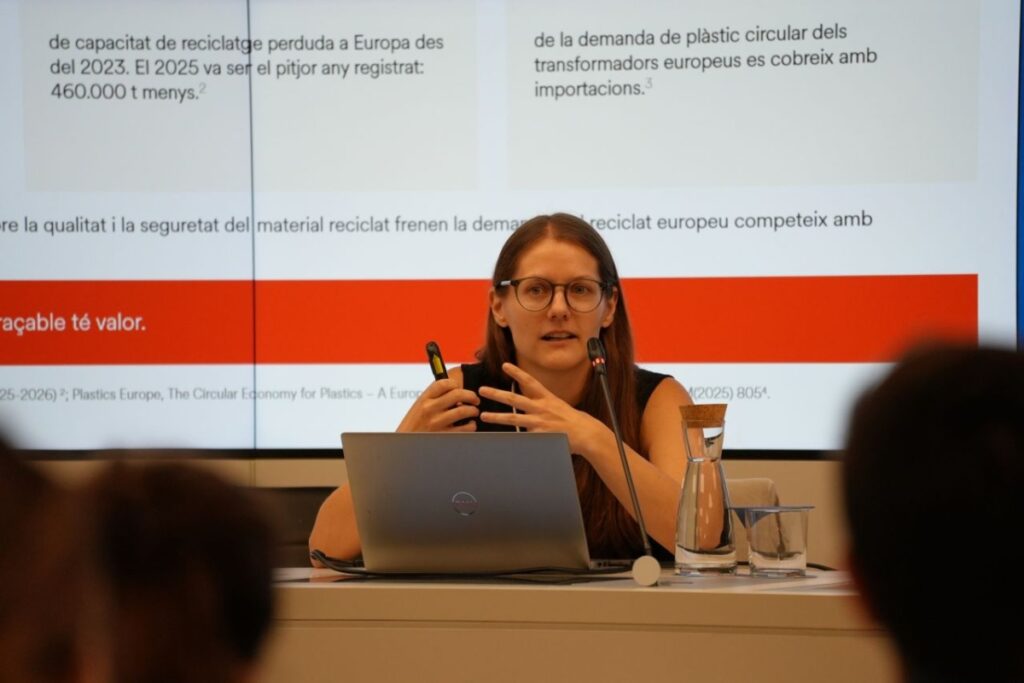
According to Bianca Tilliger, Senior Consultant at inèdit, “the Port of Barcelona has an abundant and valuable resource: relatively clean and homogeneous plastic waste, such as logistics film and protective tarpaulins used in the shipbuilding industry, for which there is potential demand in other sectors. Industrial symbiosis represents a real opportunity here; ultimately, collaboration between companies is what will turn this opportunity into concrete projects”.
Bianca Tilliger, Senior Consultant at inèdit: “Industrial symbiosis represents a real opportunity here; ultimately, collaboration between companies is what will turn this opportunity into concrete projects”
To promote plastic circularity in the port area, the CIRCULARS programme envisages two lines of action: the creation of a local plastic waste recovery plant, initially focusing on polyethylene (PE) and polypropylene (PP), and technical training for companies to improve plastic sorting at source, scheduled for 2027. These initiatives aim to support the recovery of high-quality materials, their reintegration into local value chains and greater collaboration between companies, helping to move towards a local circularity model.
The DELTA project is led by Fundació BCN Port Innovation, with the support of inèdit and Símbiosy and funding from the Agència de Residus de Catalunya (ARC).