
NEWS
Eco-innovation is becoming established in Spanish industry, with strategies spanning processes, products and business models
An analysis by inèdit of 93 industrial companies across Spain points to design as a strategic lever for accelerating the transition towards a circular economy. The study is part of an ADI-FAD project funded by the Ministry of Industry and Tourism.
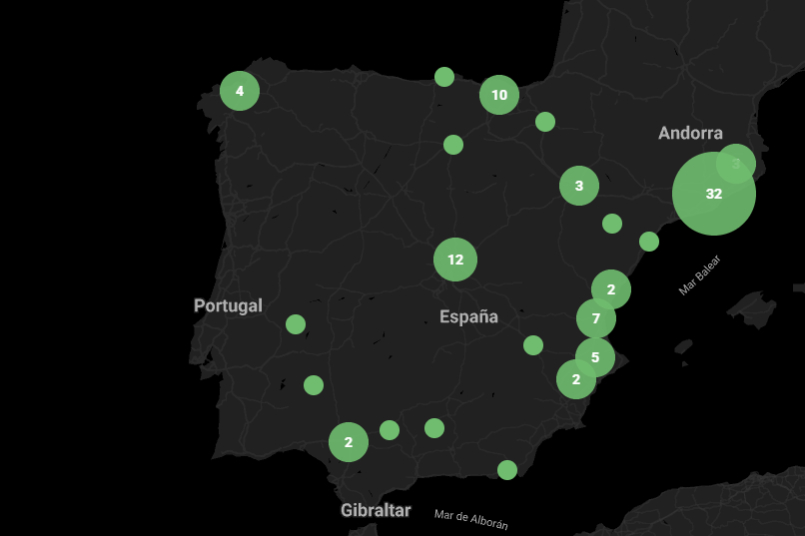
Eco-innovation is now widely established in the production processes of Spanish industry, and circular approaches are beginning to be integrated, albeit in a fragmented way: companies are applying circularity strategies only partially, and only the most mature organisations are achieving a systemic vision that connects design, processes and business models. This is the main conclusion of Industria Sostenible, an analysis carried out by inèdit based on a sample of 93 industrial companies from across Spain, which offers a clear snapshot of the current state of eco-innovation. The study was conducted within an ADI-FAD project supported by the Ministry of Industry and Tourism. The results were presented on 7 May at the Disseny Hub Barcelona and are available at www.industriasostenible.com.
The starting point is the conviction that industrial design is not limited to an aesthetic or technical function, but has enormous strategic potential. “Design and industry are inseparable; design is key to making our industry more efficient, sustainable and human,” says Salvi Plaja, president of FAD. Applied from an ecosystem perspective, it is a fundamental tool for decarbonising industry, strengthening the resilience of production systems and accelerating the transition towards a circular and regenerative economy. In the words of Jordi Oliver Solà, executive director of inèdit, industry “is immersed in a profound transformation driven by the urgent need to reduce the environmental impact of products and services and to respond to increasingly aware demand and increasingly demanding environmental regulations”.
Seven strategic sectors under analysis
The analysis focused on medium-sized and large companies across Spain operating in strategic manufacturing sectors: wood and cork (excluding furniture), basketry and esparto; plastics and rubber product manufacturing; metal products (excluding machinery and equipment); non-metallic mineral products; electrical equipment manufacturing; motor vehicles, trailers and semi-trailers manufacturing; and furniture manufacturing. The study examined how these companies incorporate circular eco-innovation strategies into their day-to-day operations in order to reduce environmental impact and improve efficiency.
Practices aimed at improving energy efficiency, waste prevention and digitalisation are present in almost all of the sectors analysed, driven by regulation, the cost savings they deliver and the availability of technical solutions.
The project aims to identify, analyse and disseminate good practices in industrial production processes, where design acts as a lever for change towards sustainability, efficiency and competitiveness. It also seeks to provide a structured overview of the current state of eco-innovation in Spanish industry, identify which strategies are already established and which remain at an early stage, detect opportunities for improvement and emerging trends with strong transformative potential, and anticipate the evolution of the industrial fabric by projecting how the industry of the future could take shape in line with sustainability, efficiency, innovation and decarbonisation goals.
Design, efficiency and new business models
The study shows that process improvement practices such as energy efficiency, waste prevention and digitalisation are present in almost all of the sectors analysed. This is largely driven by regulation, cost savings and the availability of technical solutions. At the same time, product design based on environmental criteria is gaining prominence, particularly in sectors such as furniture, electrical equipment and minerals, where strategies such as dematerialisation, the selection of low-impact materials and design for longer product lifespans are being applied.
New business models are still at an early stage, and only some sectors, such as electrical equipment and furniture, have begun to explore strategies such as servitisation or second-hand sales.
New business models, however, remain at an emerging stage. In this regard, only a few sectors, such as electrical equipment and furniture, have begun to explore strategies such as servitisation, product take-back schemes and second-life sales.
The study also finds that material-intensive sectors are applying more design measures, while technology-oriented sectors are making greater progress in services. Traditional sectors continue to focus most of their efforts on production processes.
What is eco-innovation?
Eco-innovation is an approach aimed at responding to environmental challenges while creating new business opportunities by driving change across the whole company: from business model and strategy to the design of products, services and production processes, taking the entire value chain into account. Eco-innovation means transforming the way organisations think, design and operate. It involves adopting solutions that reduce environmental impact throughout the life cycle of products, services or processes while also generating economic value.
Eco-innovation can be classified into three categories according to its area of application:
- – Processes: applied to the manufacturing stage, it involves introducing changes in the way products are made in order to optimise resources. 98% of the companies analysed apply strategies in this area.
- – Products: applied to the design stage, it involves conceiving products so as to reduce their environmental impact from the outset. 88% of the companies analysed apply strategies in this area.
- – Services: applied to the way companies deliver value by rethinking their services and relationships with customers. Only 27% of companies apply strategies in this area.
Industria Sostenible also outlines the first steps for integrating eco-innovation into companies. Adopting eco-innovation means embarking on a continuous transformation process that affects every area of an organisation. For this change to be effective, it must therefore be approached in a structured way, with strategic vision and through a logic of progressive improvement.