
REPORTATGE
Greenshouting: the answer to greenwashing and greenhushing
The new concept advocates for a more transparent, honest and rigorous approach to sustainability communication to strengthen the credibility of environmental claims, rebuild trust in brands and counter misinformation.
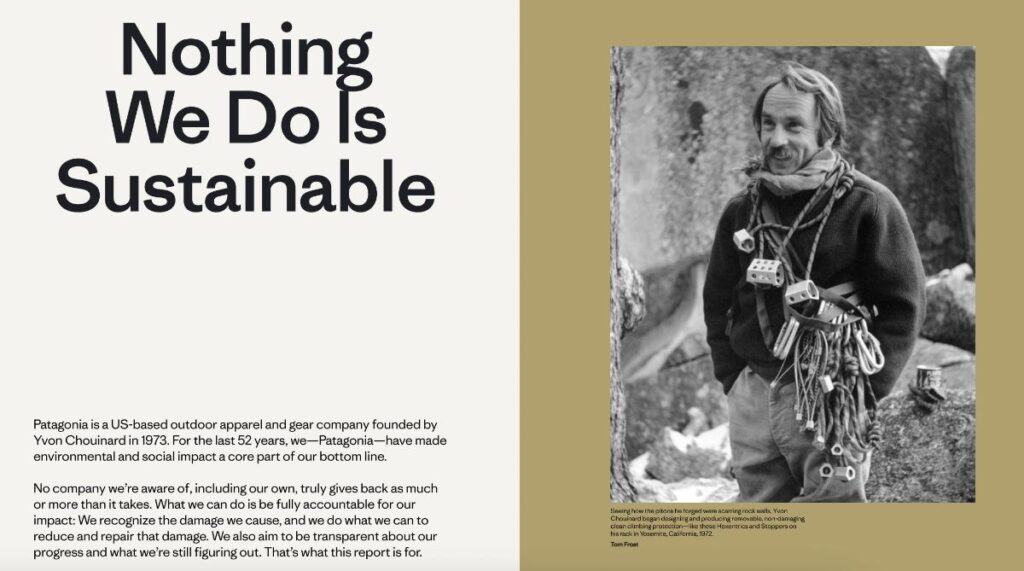
A few months ago, Patagonia broke the mould by publishing a sustainability report under the philosophy that “nothing we do is sustainable”. The company openly acknowledged that, despite its efforts, it had not yet achieved carbon neutrality. Rather than presenting sustainability as an unqualified success story, the brand chose to communicate its limitations and the challenges that still lie ahead. This exercise in honesty marks a turning point in the way organisations communicate sustainability.
For years, some companies have resorted to greenwashing – making environmental claims that are vague, unsubstantiated or even misleading. According to data published by the European Commission in 2020, 40% of companies’ environmental claims were not supported by evidence, while more than half provided vague or potentially misleading information. Greenwashing remains a significant problem today: it erodes consumer trust, distorts markets and slows climate action. To address these practices, the European Union has introduced initiatives such as the Empowering Consumers for the Green Transition Directive, which will strengthen the requirements governing environmental claims and sustainability-related information.
From green bragging to staying silent
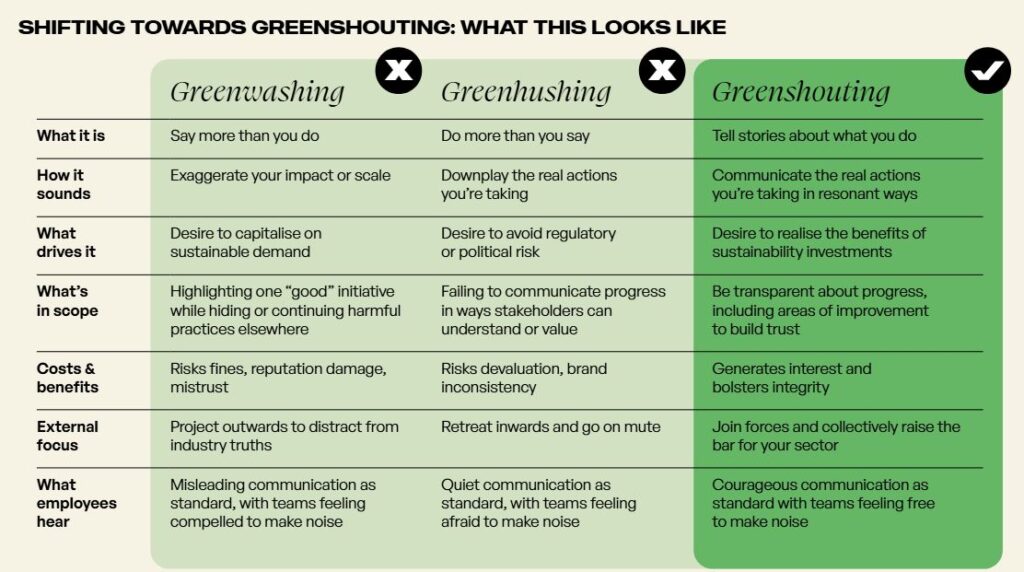
However, the crackdown on greenwashing has had an unintended side effect: the rise of greenhushing. This term refers to companies that are making genuine efforts to improve their sustainability performance but choose not to communicate those efforts—or do so only minimally—out of fear of being accused of greenwashing, facing regulatory scrutiny or suffering reputational damage.
53% of consumers believe that when a brand remains silent about its environmental initiatives(Edelman Trust Barometer 2025)
Paradoxically, silence can have the opposite effect. According to the Edelman Trust Barometer 2025, 53% of consumers believe that when a brand remains silent about its environmental initiatives, it is probably either doing nothing or hiding something.
Greenshouting: communicating with rigour and confidence
It is in this context that the concept of greenshouting has emerged. Greenshouting can be understood as the practice of communicating sustainability efforts openly, accurately and confidently, grounding claims in evidence, acknowledging challenges and contributing to a more transparent information ecosystem.
The term has gained visibility following the publication of the GreenSHOUTING Guide, developed by Creatives for Climate and B Lab, two independent non-profit organisations.
“The choice is no longer between perfect communication and silence, but between leading the narrative and abandoning it”, argue the authors of the GreenSHOUTING Guide
The aim is not to exaggerate or embellish results, but to communicate them honestly and confidently. As the guide’s authors argue, “the choice is no longer between perfect communication and silence, but between leading the narrative and abandoning it.” In their view, “communicating sustainability with accuracy and credibility is not only an ethical responsibility; it is also a business strategy linked to long-term relevance and resilience.”
According to its promoters, the benefits extend far beyond corporate reputation. When companies communicate their progress transparently, they help build trust, influence public policy, attract talent and accelerate the transformation of their sectors.
A guide to help brands break the silence
The GreenSHOUTING Guide aims to provide practical tools for brands, creative teams and communication professionals to communicate sustainability progress with confidence, credibility and cultural impact.
Drawing on the experiences of public-sector leaders and fifteen pioneering brands, the guide argues that transparency, honesty and courage are essential ingredients for driving meaningful change.
Among other recommendations, it encourages organisations to build a robust sustainability strategy, critically review their environmental claims and explore the so-called “Seven Dials of Greenshouting”, a framework designed to help organisations communicate their impact more effectively.
Patagonia: an example of the new paradigm
In this regard, Patagonia’s case illustrates the philosophy behind greenshouting particularly well. Its sustainability report does not seek to present a flawless image of the company; instead, it provides a transparent account of both the progress achieved and the challenges that remain.
This approach represents a shift in paradigm: moving away from communications based on triumphalist messages or strategic silence towards a more honest, rigorous and mature form of communication. One that does not hide difficulties, but does not shy away from discussing progress either.
Because, in contrast to both greenwashing and greenhushing, greenshouting offers a third path: communicating sustainability without exaggeration, but also without fear.